
The city is the ridge
Segovia stands on a narrow rock between the Eresma and the Clamores. The Roman aqueduct marks the low end; the Alcázar juts over the gorge at the other. You walk because the old town is that ridge, and the side lanes drop off it.
- On December 13, 1474, Isabella was proclaimed Queen of Castile in the main square, at the church of San Miguel. Segovia already held the crossing of the Guadarrama, so the castle and the market square share the same rock.
- Calle Real, now mostly Calle de Juan Bravo, runs the spine from the aqueduct toward the cathedral. Casa de los Picos and the other noble houses front that street. Behind the facades the ground falls to the Clamores on one side and the Eresma on the other.
- People still pass under the aqueduct arches to cross Plaza del Azoguejo. In the evening they walk the ridge again, once the granite has cooled.
What to eat
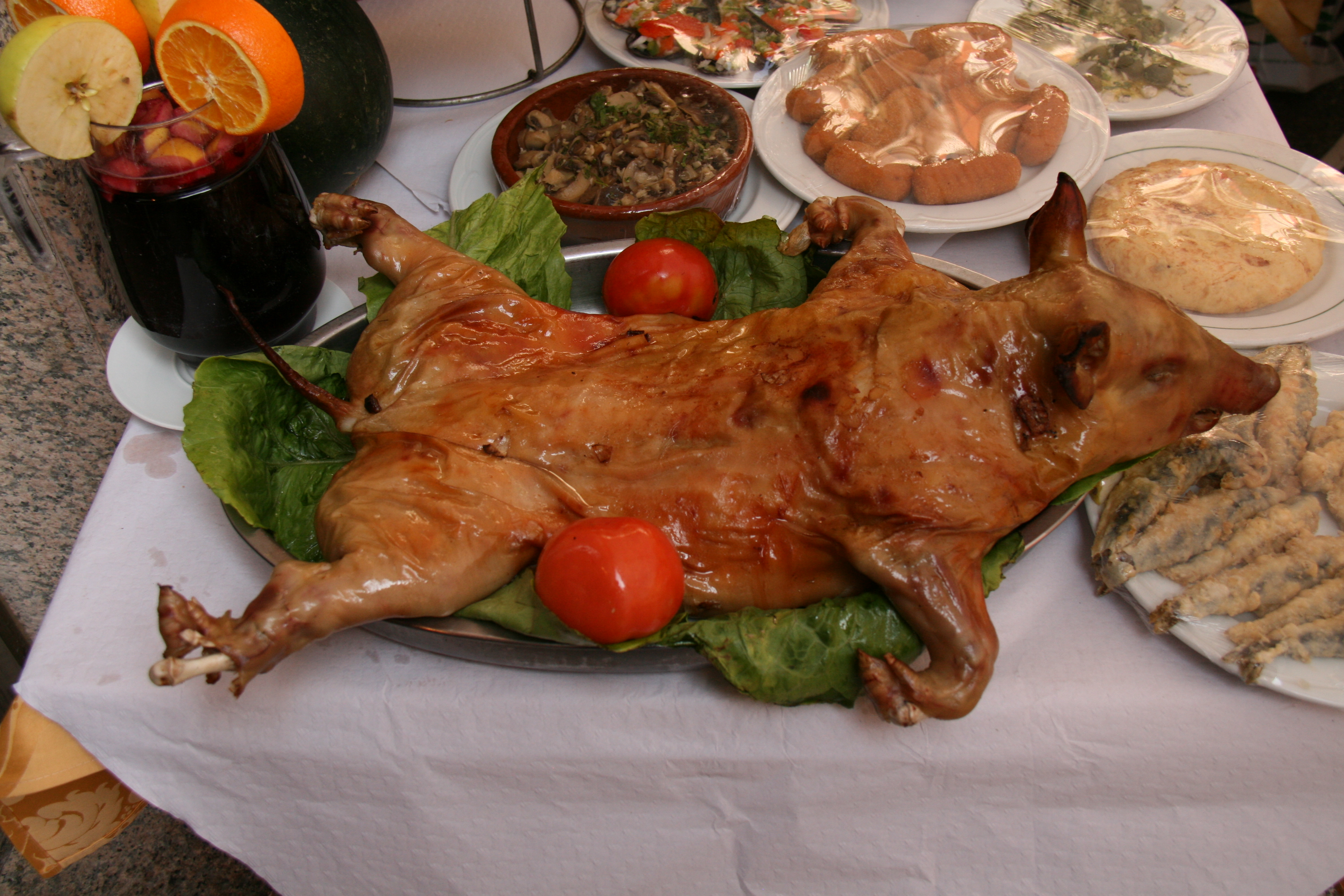
Cochinillo asado — Wood-oven suckling pig was the heavy meal at inns serving travelers coming over the Guadarrama. Segovia's mesones still serve it as the long midday lunch.

Judiones de La Granja — These large white beans grow at La Granja de San Ildefonso, in the cooler hills just south of Segovia. Farm kitchens stewed them with pork, and the dish is still tied to that valley.
Chorizo de Cantimpalos — Cantimpalos, about nine miles north of the city, cures pork in the dry winter air of the plateau. The sausage carries the town's name because that climate finishes the meat.
Ponche segoviano — A dense almond cake first sold in Segovia in 1926 by a pastry cook called Frascuelo. Shops on the ridge still cut it into thick slabs.
Before you go
Don't forget the ticket
If you want the inside, buy it before you go. The walk still works from the street.
Alcázar of SegoviaInterior visitSee tickets ›Catedral de SegoviaInterior visitSee tickets ›